

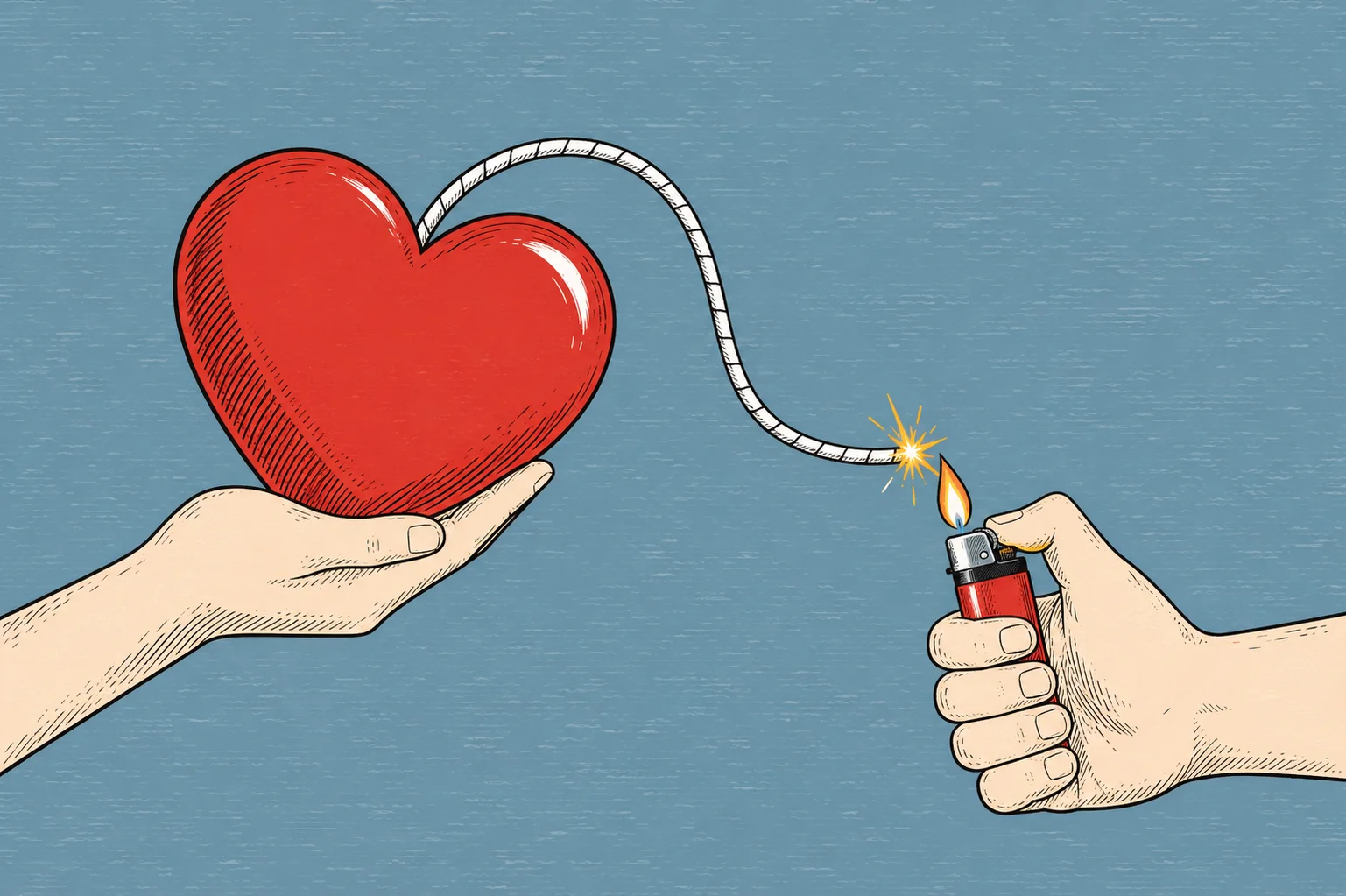
You may have heard the term love bombing online. It’s a pattern in relationships which start almost too well. Constant texts, grand declarations within days, a partner who calls you "the one" before you've even met their friends. It feels flattering, even electric, right up until it doesn't. Understanding it early can be the difference between recognising a red flag and mistaking it for the start of something real, only to be let down in the future. You can also take a test to understand how toxic your relationship is.
What Love Bombing Means
Love bombing, at its core, describes a pattern of excessive affection, attention, and flattery used early in a relationship, not as a natural expression of growing feelings or of genuine sparks, but as a deliberate or semi-deliberate tactic to fast-track emotional attachment and, ultimately, control. It can look like constant messaging within the first days of knowing someone, extravagant gifts before any real trust has been built, or declarations of love and future plans, moving in together, marriage, that arrive long before the relationship has had time to earn them. It can look like excessive control and influence in the early days of a relationship in a way that may get your guard up.
What makes love bombing distinct from simply being an enthusiastic, affectionate new partner is the speed and the intensity relative to how well the two people actually know each other. Genuine affection tends to build alongside real familiarity. Love bombing skips that process entirely, because while people can fall in love hard and fast, love bombing looks more like a set pattern being followed than something catered to you.
Understanding the appeal is part of understanding why it's so hard to spot in the moment. Being the sudden, singular focus of someone's attention is intoxicating. It can feel like finally being seen, chosen, prioritised in a way that maybe hasn't happened before, especially for someone coming out of a relationship where they felt overlooked or undervalued. The compliments, the constant contact, the grand gestures, all of it activates a real, physiological sense of excitement and validation. It’s why people don't recognise the pattern until they're already deeply attached.
What Separates Love Bombing From Genuine Affection
One of the clearest signs is pace that feels disproportionate to actual time spent together. If someone is talking about a shared future, moving in, marriage, forever, within the first few weeks, when you’ve barely met 5 times and not talked about any of the deep things, before you've navigated a single disagreement or seen how they handle stress, that speed might be more of a warning sigh rather than a whirlwind romance.
Another sign is the sheer volume of contact, constant texting throughout the day, distress or guilt-tripping if you don't respond quickly enough, a level of communication that starts to feel more like being monitored. Genuine affection generally allows space. Love bombing tends to fill every available gap, often under the guise of missing you.
A third sign is how attention responds to boundaries. In a healthy dynamic, saying you need space or a slower pace is met with understanding. In a love bombing dynamic, that same request is often met with sudden coldness, guilt, or a dramatic emotional reaction, a signal that the affection was never really about you, but about maintaining control over the pace and direction of the relationship.
A fourth, subtler sign is the mismatch between words and depth. Grand declarations, "I've never felt this way about anyone," "you're different from everyone else," arrive without the accompanying curiosity that usually comes with real interest, real questions about your past, your fears, the parts of you that are harder to love.
Why Love Bombing Works On Those Who "Know Better"
It's a common misconception that only people with low self-esteem or limited relationship experience fall for love bombing. In reality, it works precisely because it targets a universal human desire, to be wanted, chosen, prioritised, and it works especially well on people going through a vulnerable period, after a breakup, during a lonely stretch, or simply at a point in life where connection feels overdue. Intensity gets mistaken for depth, and speed gets mistaken for certainty, and both of those mistakes are easy to make even for people who are otherwise thoughtful and self-aware.
There's also a timing element worth naming. Love bombing tends to escalate precisely during moments when a person's guard is naturally lower, often deliberately. Recognising the tactic requires slowing down enough to ask whether the intensity matches the actual depth of the relationship, a question that's much easier to ask from the outside than from inside the early rush of feeling wanted.
What Happens After the Love Bombing Stops
Love bombing rarely sustains itself indefinitely, and what often follows is one of the more disorienting parts of the pattern. The intense attention that defined the early weeks gradually pulls back, sometimes abruptly, sometimes as part of an inconsistent push-pull cycle, warmth followed by withdrawal, followed by warmth again. That inconsistency can create a kind of emotional dependency, where a person starts working harder and harder to earn back the intensity of those early weeks.
In more serious cases, this pattern is part of a broader cycle of control, where the early affection was never separate from what follows, but was actually the first phase of it, establishing deep attachment before the relationship shifts toward control, criticism, or emotional withdrawal used to keep a partner off balance. Recognising this progression is part of why understanding love bombing early matters so much, as it's rarely an isolated event.
What To Do
If some of this feels familiar, the most useful first step is simply slowing things down deliberately, creating space to observe how someone responds to a request for a slower pace, rather than continuing to move at the speed they've set. A genuine partner will generally respect that space without punishing you for asking for it.
It also helps to talk it through with someone outside the relationship, a friend, a family member, or a therapist, since the intensity of love bombing can make it genuinely difficult to see the pattern clearly from the inside. An outside perspective, someone not caught up in the same emotional momentum, often notices red flags long before the person experiencing them does.
This kind of pattern recognition, learning to tell intensity apart from genuine depth, is something Infiheal keeps coming back to across its wellbeing resources. For more, see our related read on recognising unhealthy relationship patterns early
Conclusion
Love bombing can feel like the beginning of something extraordinary, which is what makes it so easy to miss. The speed, the intensity, and the way it responds to boundaries are what separate it from genuine, slow-building affection. Recognising the pattern early, and giving yourself permission to slow things down, is one of the clearest ways to protect yourself from where that pattern often leads.