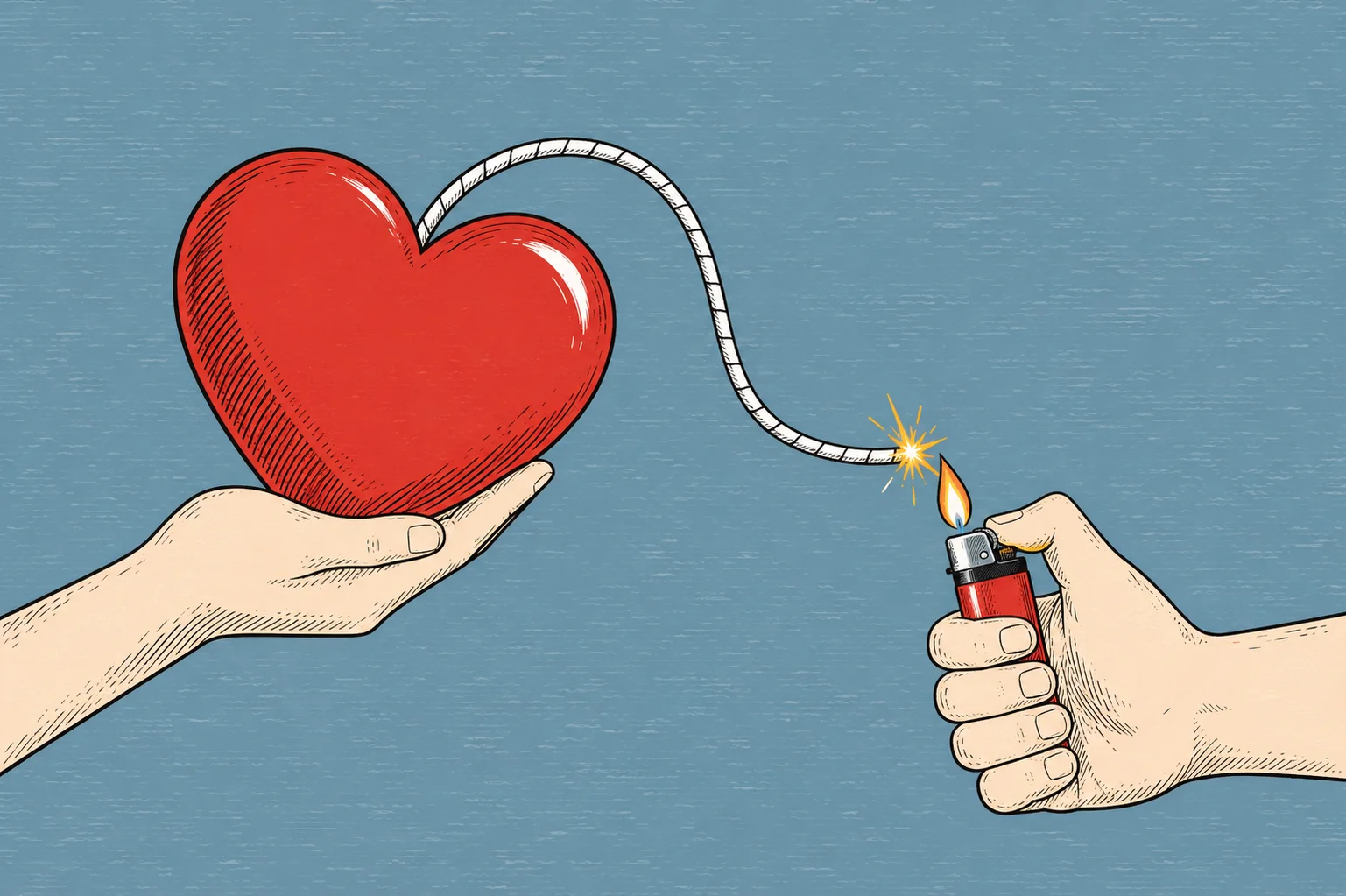


Have you ever wondered why you keep reacting to certain situations and relationships in particular patterns? Everything objectively looks okay on the surface, and things are going great, but there’s always a voice in the back of your head thinking about the worst-case scenario. A delayed text or being left on read can make you feel as if you’re losing the other person for good. There’s this persistent and constant worry and anxiety that influences every action you take and how you interpret that of others. It’s not just something you’re doing to yourself or to make things difficult, but this pattern may have more to do with the attachment pattern you’ve formed. That fear of the other person walking away, leading to latching on to them or overanalysing their actions, may be a hint that you have an anxious attachment style. An attachment style is a relational pattern formed depending on your childhood and your earliest interactions with the world and your caregivers.
What Is An Anxious Attachment Style?
Attachment styles are typically of two types, namely secure or insecure. An insecure attachment style is one where your parents or caregivers were perhaps not the most consistent in how they cared for you, praised you, or overall interacted with you. In adulthood, these can present as an anxious attachment style, an avoidant attachment style, or a combination like an anxious-avoidant attachment style. As an adult, this may lead to you constantly craving the comfort and stability of a relationship or friendship yet simultaneously fearing that you may end up losing it, so you're doing your best to hold onto it. It might not even be something you’re doing consciously, but rather a learned pattern of behavior after what helped you retain closeness and attention in childhood.
Another form of an anxious attachment style is the anxious-avoidant style, wherein the fear of losing someone and desperately wanting them to stay in your life may still be present, but the resulting behavior would actually be to pull away and avoid the person, probably because you realized young that it was safer to do that than try and hold on to someone.
Signs of Anxious Attachment
Yet, this is all quite theoretical, and it is difficult to imagine what these patterns might look like in reality. Anxious attachment can typically show up like the following:
- Constant need for reassurancePersistently checking in with your partner or friend to see whether they’re upset or annoyed with you or if they still care about or love you
- Fear of abandonmentConstantly worrying and stressing about when someone will leave you because you think that everyone leaves, even without evidence
- Constant overthinkingTaking an isolated incident, whether someone being curt or a message not replied to, and catastrophising over what it may mean for your relationship
- Struggling when aloneFinding it difficult to sit with yourself or go somewhere alone, or be single for a long time
- People-pleasingSuppressing your needs and wants to go along with what the other person would like to make sure they don’t get upset with you or leave you
- A sense of jealousy and possessivenessOverthinking about their other friends or people in their lives and worrying that they’ll leave you for them. This may also show up if the person is quite independent; it may make you worry that they don’t need you or don’t care for you as much.
Causes of Anxious Attachment
Developing an anxious attachment style does not mean you did anything wrong; it was something that you developed as a response to your environment and can be caused by many factors.
- Inconsistent caregiving in childhoodA parent or caregiver who could switch between being available and loving or distant and emotionally unavailable or whose moods rapidly fluctuated.
- Early separation or lossIf you experienced major grief or a period of extended time away from your primary caregivers when young.
- Past relationship traumaWhile normally associated with childhood, if you’ve had bad experiences in friendships or relationships where you experienced abandonment or betrayal, you may also develop this.
How to Manage an Anxious Attachment Style
However, this is not a permanent thing you have to struggle with but a tool to understand yourself better. While going to therapy is always a good idea to unpack why you’re feeling a certain way, you can also:
- Practice self-soothingTry managing a situation yourself, even if for 5-10 minutes, before seeking support or reassurance.
- Communicate needs directlyIf you don’t like when someone waits too long before responding, you can communicate this and work on finding a middle ground.
- Build a life outside the relationshipThrough friendships, hobbies, and personal goals.
- Challenge anxious thoughtsBy checking them against actual evidence rather than assumptions through noting down your observations in a book or journal.
In addition to professional help, tracking or discussing your anxious thoughts with tools like Healo, an AI mental health chatbot, can help you process your worst thoughts and give you a safe space.
Conclusion
An anxious attachment style often stems from early inconsistent caregiving and shows up as fear of abandonment, overthinking, and a strong need for reassurance in relationships. With self-awareness, direct communication, and support from tools or therapy, it's entirely possible to move toward a more secure, confident way of connecting with others.