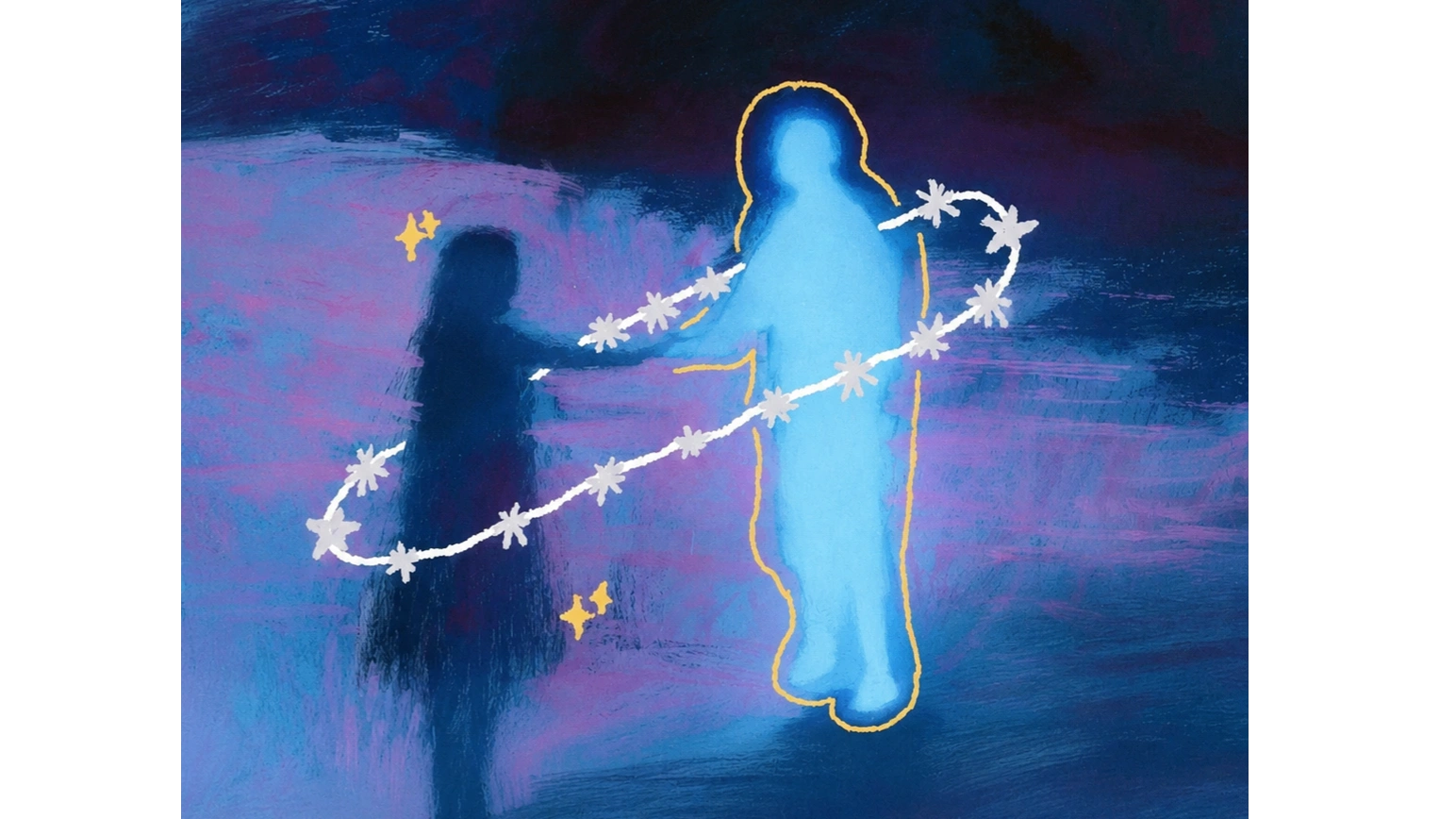


When a romantic relationship ends, there's a whole cultural script waiting for you. Movies and shows depict it, there are entire playlists on Spotify solely dedicated to it, your friends probably know how best to support and help you through it. There are words and terms for it, "heartbreak," "breakup," "getting over someone,". Even just saying “it’s complicated” is enough to get you through the situation with people understanding what you’re going through. Yet, when a friendship ends, none of that happens. It’s not treated as something super upsetting or something that you need to be supported through. You may get the offhand comment about how fights are the worst, but there’s no dedicated support guide. No playlists, no ice cream delivery. You're expected to just continue, as if the relationship and person never mattered at all, beyond the small gossip session people might get out of what happened.
Yet, the end of a friendship or a friendship breakup can carry grief and loss as intense as the loss of a romantic relationship. In fact, it might be even worse. People are expected to go through a few breakups in life, yet, it’s not expected that you’ll stop being friends with your close ones. And yet, somehow, it almost never gets talked about in the same way or with the same impact.
Struggling with how to cope after losing a friendship?
What Is a Friendship Breakup?
A friendship breakup is what the term defines, the loss of a friendship, often a close or deeply connected one. Your best friend perhaps, but it’s more than just people growing up and growing apart. It can be ugly, through a series of fights or accusations, a boundary crossed or some kind of betrayal. But it can also be the recognition that you’re not right for each other anymore. Differing life goals, not enjoying their company anymore, until someone who you used to spend all your time with feels more like the occasional obligation.
Perhaps the worst thing is that due to the absence of the vocabulary for a friendship breakup, and the subsequent absence of a culture around it, nobody tells you how to navigate the situation in. In fact, wanting to sit down with someone to tell them that you don’t want to be their friend anymore would likely be viewed as an over-correction or exaggerated response. Common advice might be to just slowly distance yourself so that there’s no hurt or ugly feelings. The kind of open communication that is encouraged in the ending of a romantic relationship, to not ghost people, is rarely echoed for platonic ones. Yet, it is that ambiguity that makes it difficult to truly find peace because there’s no clean break or resolution, no chance to unpack why you grew apart until one person sits down and makes it ugly.
Why This Grief Gets Dismissed
There’s something about the way romance is prioritised in our lives. No one upon asking will ever tell you that friendships are not important, but the underlying message is that they can’t be the most important relationships in your life. Your family comes first, and it is with that expectation that romantic relationships come first. Even if you don’t want the idea of a nuclear family, romantic relationships are considered serious, the element of expected monogamy expects you to find one person and stick to them for the rest of your life, through thick and thin. Dating is considered the journey you have to go through to find that ‘one’.
So, the loss of the ‘one’, is never just about the person itself, but rather what they represented. The hopes, dreams, and future you might have attached to them. Maybe a shared house and shared responsibilities. So, people are kinder. They expect you to have a hard time, they expect you to take some time before getting back to it or getting back to normal, there’s questions of whether they’ve met family and it’s understood to be so much worse when they have.
None of that is associated with friendships. Since we’re not in kindergarten, there’s no expectation of just having the one close friend. In fact, most people would actively encourage you to get many and socialise more even before any friendship breakup happens. But because of that expectation, the idea is that when you end up separating from a friend, it’s rarely treated that serious. After all, you have other friends. You’ll make other friends. People rarely go friend dating in the same way, although that is changing with social clubs becoming even more common as people feel more lonely in life.
Yet, the point is, the loss of a friend, even a childhood one, even someone you lived with, someone who’s met and is close with your family, it’s rarely treated with the same amount of empathy or impact. Sure, if it’s ugly or there’s some betrayal or trust people will sympathise and get mad on your behalf, but even then it’s about the hurt their actions cost you, not the loss of the relationship itself. They’re considered quite replaceable, oh you’ll make more friends. Oh you can find another roommate. Since people can have many friends, there’s an inevitable devaluation of the loss of one due to how easily replaceable they’re considered. Of course, no one would say this out loud and may even challenge this narrative. Yet, if someone was crying over their best friend six months after they stopped talking, they probably wouldn’t react with the same empathy as someone doing the same with a romantic partner.
If you’re wondering whether grief may be affecting you:
What Makes Friendship Breakups So Hard to Process
But, when it’s considered so routine and normal, why do they hurt so much? There is the lack of expectation of loss. People often have some wariness in a romantic relationship. There’s the thoughts of what might lead to a breakup, how you’d navigate life after that, what would be your final straw. Since it’s considered so permanent, people inevitably are more on guard while entering a new one.
That’s not the case for platonic relationships. Of course, people are still aware of their boundaries and wouldn’t be close to someone who hurt them but people don’t become friends with the expectation or even thought about it ending. Friendships have a sense of permanence to them. In the absence of a great fight, you expect that they’ll stay on your instagram, you’ll wish them happy birthday and invite them to your wedding even if you move to a different continent. So if something happens where they completely leave your life, it’s like a shock to the system, an absence that was never considered.
Then there’s those you never expect that to happen with. Your childhood friend, your best friend, whenever you meet them in life, the person who would be part of your wedding party. You don’t think that they’ll ever leave your life, you expect there to be a permanence. You talk about staying single together, of introducing your future kids to each other, of going on trips together when you’re old and retired. So when you lose those friendships, the sense of grief is for a life you imagined, the sense of identity it gave you. Someone who knew you at a specific part of your life and saw the ugliest version of you and now they’re just not around anymore. It can be heartbreaking to navigate that loss, both them and the version of you that they knew.
What Your Mind Might Be Telling You
Due to the lack of culture surrounding it, the grief may show up in unexpected ways as well. Maybe you know how you react to the loss of a romantic relationship and expect this to be similar, yet it might not be. And yet, in many ways it will be. It will be something the two of did together, some quirk, some song or show that reminds you of them. The school you went to, the cafe you always went to, a horde of small things that will remind you that they’re not in your life anymore. When you need to complain about work or just want to share a meme about the world-cup, you’ll realise you can no longer just share it with them.
You might even beat yourself up about it, wondering why it’s bothering you so much and that you should just move on because you have other friends you can spend time with. But if you have mutuals it can be an even more awkward space to navigate, feeling like you’re constantly on edge and not knowing how to act. You might even wonder if you’re over-reacting, if it really was that serious, if there’s any way to ignore it or just move on. Yet, things are rarely that easy.
Practical Ways to Process a Friendship Breakup
The main step is of course that you have to acknowledge that it’s a loss, there’s a sense of grief in it. Even if you don’t tell anyone else, you have to tell yourself that you miss this person and your relationship and give yourself the space to do so. It helps in actually processing that loss.
Plus, there’s no rush. You don’t have to find a new best friend by the end of the month. There’s no timeline. Even if you do have other close friends, they’re still not replacements for who you lost, you may never find that replacement, that’s okay. You don’t have to rush to try and find that replacement or tell yourself that it didn’t really matter. Plus, in this day and age of ‘tea’ constantly telling everyone how things went down or why you’re not friends anymore doesn’t actually help you process it, but rather might make things worse because you’re constantly rehashing it.
Plus, when you have some space, whether with a friend or with Healo, it’s important to talk about why that relationship no longer exists. When you miss someone, you often miss the romanticised version in your head than the reality. Once you understand why things happened the way they did, you’ll find it easier to accept and move on.
Conclusion
Friendships are some of the most important relationships in our life, yet are rarely treated with the grace they deserve. You’re allowed to grieve over them, similar to any romantic loss. Allow yourself to name and process it rather than just brushing it away so that you can actually heal and move on from the situation.