
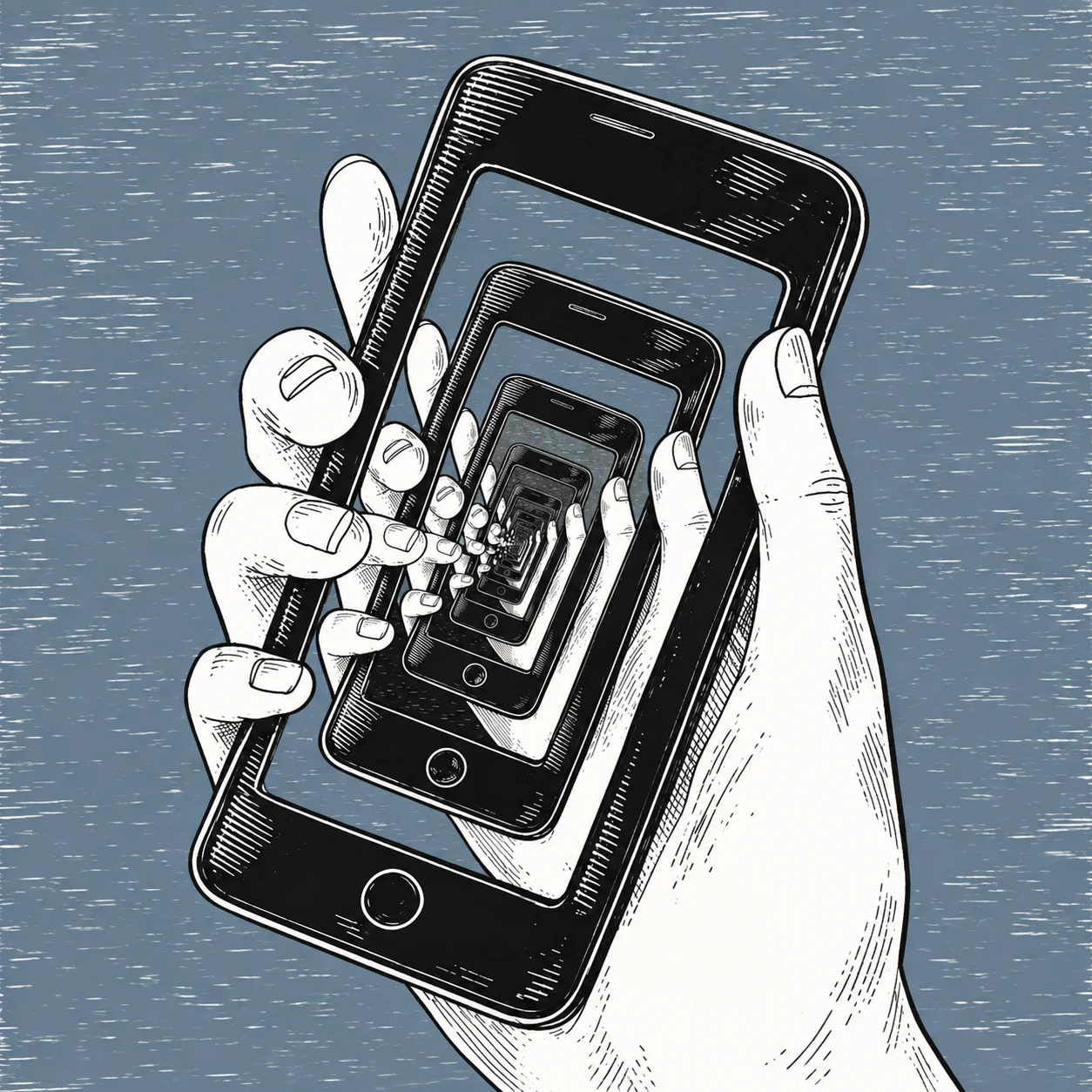
You open Instagram to check one thing. A few minutes later, you have read about a war, watched a video about a natural disaster, seen someone discuss a new health threat, read three angry comments and clicked on another update because you’re still not sure if you have understood it all. You are informed. But at the same time, you do not feel informed. The next time you look up from your phone, you realise that hours have passed and you have a feeling of pessimism that lingers with you throughout the day. This is what doomscrolling looks like. It can be addictive, time-consuming and damaging at the same time while making you feel like you’re doing this to inform yourself better. After reading this, if any of it feels relatable, it might be a good idea to understand the extent to which social media has an influence on your life.
What is Doomscrolling?
Doom scrolling refers to the repeated act of consuming distressing, threatening or negative content online, often much longer than you intended to. It’s important to note that exposing yourself to negative information is not necessarily doomscrolling. For example, reading news about a recent natural disaster to stay informed, coming across a health article that follows medical guidelines and provides information regarding a life threatening disease isn’t doomscrolling. Staying informed can be useful and necessary at times. What separates ordinary information from doomscrolling is the relationship you develop with the information. After being exposed to negative content online, you find yourself more scared than informed or keep thinking about it even hours later- it can be a sign that you’ve engaged in doomscrolling.
Why Do We Keep Scrolling Through Negative Information?
The strange part about doomscrolling is that people continue engaging in it even after knowing that the information is making them feel worse. The behaviour becomes easy to understand after knowing what it’s doing to us psychologically. So, let’s take a deep dive into the reasons behind doomscrolling:
The Search For Certainty
When something frightening or unpredictable happens, our minds naturally want more information. Questions like “What exactly happened?” “How much was the impact?” “What happens next?” “Can it affect me?” prop up into our awareness. Normally, information tends to reduce the uncertainty around the event. However, with doomscrolling, this never happens because there is almost always another update or contradictory information available. This creates an anxious loop where our search for certainty is never met. A study found an association between anxiety, intolerance of uncertainty and doomscrolling, suggesting that difficulty tolerating uncertainty may be relevant to persistent negative news consumption
When Information Starts To Feel Like Action
Another reason why doomscrolling may happen and can be hard to stop is because it can feel productive. By scrolling through infinite news articles, it’s very easy to feel like you are learning something and you are staying updated. There can even be a sense of stopping = being uninformed and unaware. By staying updated, it gives our nervous system the signal to be ready for flight or fight at all times- however, the activation of the nervous system can be harmful without the presence of an actual stimulus. Moreover, reading about endless amounts of disasters or threats rarely ever prepares us for an actual emergency which is much more emotionally overwhelming to experience rather than just reading about it. After a certain point, the article may add very little to your understanding and instead of giving you a clear picture of events, the only thing it does is give you another emotional stimulus to be scared about.
How Does Doomscrolling Affect Your Everyday Life?
After doomscrolling for quite some time, you may lock your phone and try concentrating or work or some other chore. Physically you may have moved on, but mentally and emotionally, you may still be on the news that you read and how many people were killed in an xyz accident. You may keep replaying the same video that you saw again and again in your head. A headline may come back to you when you’re trying really hard to study. You may find yourself checking for another update on the same news after a while when you have opened your phone for a whole different reason. A 2024 study of 400 social media users found that doomscrolling was associated with lower mental well-being, with mindfulness and secondary traumatic stress mediating this relationship. While this may not mean that every news article gives you secondary trauma, it may indicate that constant exposure to negative news online can take up a lot of psychological space in your brain- much longer than intended.
How Can You Stop The Doomscrolling Loop?
Give Your Information-Seeking an Endpoint
Before opening a social media platform, make an attempt to understand what you are looking for. Choose a number of reliable sources rather than allowing the algorithm to decide what to feed you and when you have had enough. Once your question is answered, pause before searching for another version of the same information. When you come across a really traumatic incident, create a small transition before you proceed to go ahead with your day. This transition can look like putting your phone down, taking some deep breaths, looking around your room and talking to someone before returning to the chores or work.
Understanding Your Own Doomscrolling Pattern
Doomscrolling is often seen as an inability to self-control but as seen above, it can be linked to various individual and societal characteristics such as anxiety, difficulty tolerating uncertainty, lack of attention, current circumstances of the country, personal social media habits etc. This is why, understanding your pattern behind doomscrolling can be really important rather than just calling yourself a “doomscroller” If you want to deeply explore your patterns behind doomscrolling or any other behaviour that you’re currently struggling with, you can also talk them through with Healo, an AI mental health chatbot that gives you a space to reflect on everyday patterns. Rather than diagnosing your scrolling, it can help you put the experience into words and explore what may be driving it. Because after a long scroll, the most useful question may not be: "How much time did I waste?" It may be: "What was I looking for when I kept going?"