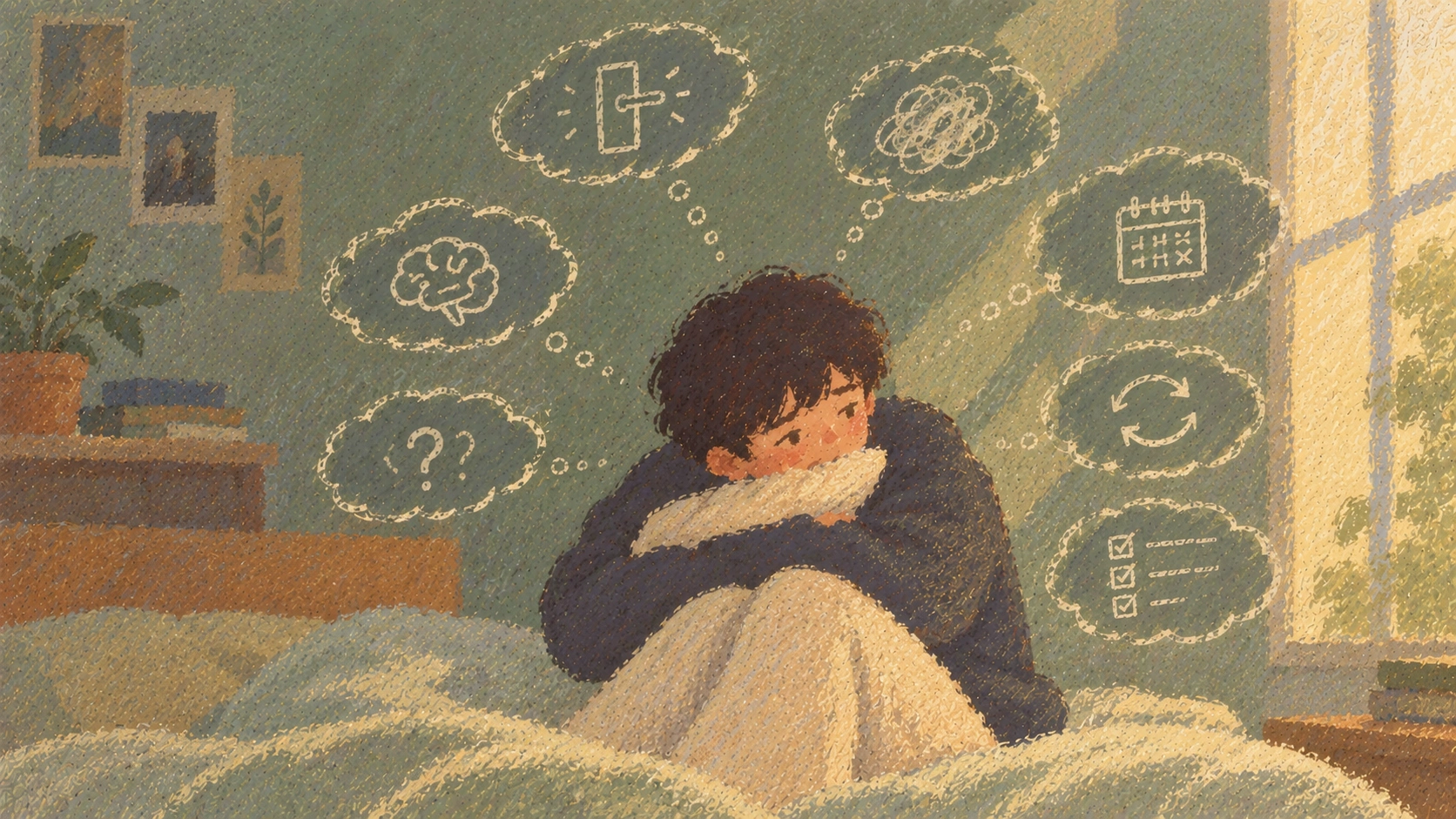


Imagine you hear a smoke alarm in your house. You check every corner of your house for signs of fire and yet find nothing. The alarm continues, and after a few minutes, the alarm itself becomes a problem. It’s not a sign of an actual threat. It is the threat.
That’s exactly how anxiety works sometimes. It is a system meant to signal a threat. When the system becomes overactive, it can continue sounding alarms after the danger has passed or when there was no danger in the first place. This makes it important to know when the anxiety mechanism can get overactive, why it happens and how you deal with it when that happens. This Infiheal blog is going to cover exactly that.
What Is An Anxiety Attack?
Many people describe anxiety attacks as an episode of overwhelming stress and worry. Even though that part is true, they often miss an important detail. Anxiety attack cannot be used interchangeably with the term “panic attack”
Why? It’s because unlike panic attack, anxiety attack is not a formal diagnosis used in DSM 5. Even though there is a formal diagnosis for anxiety disorder, anxiety disorder symptoms can also look different from an anxiety attack. The most important difference between the two of them is that a panic attack builds over a few minutes, but an anxiety attack can gradually build up for days or months depending on the underlying stressor. While anxiety attacks are highly stressful, they are less abrupt than panic attacks and may manifest as severe rumination, persistent worry and physical discomfort.
Anxiety Attack Symptoms
An anxiety attack may affect multiple systems of our body simultaneously. They can also affect individuals differently, and hence, no one has the same anxiety attack experience. Thus, let’s try to look at anxiety symptoms through their impact on various domains:
Physical symptoms
- Rapid Heartbeat
- Chest Tightness
- Trembling
- Dizziness
- Muscle Tension
- Nausea
- Headaches
- Difficulty sleeping
These symptoms occur because anxiety activates the body’s flight-or-fight system, which starts preparing the body for a future threat that may never occur.
Cognitive Symptoms
- Racing thoughts
- Catastrophic thinking
- Difficulty concentrating
- Persistent worry
- Difficulty making decisions
The cognitive symptoms act like a risk management department that never stops working. Our brains tend to scan potential problems to look for signs of danger even when there is no evidence to support that something bad will occur.
Emotional Symptoms
- Dread
- Irritability
- Overwhelm
- Apprehension
- Nervousness
Most importantly, anxiety doesn’t always manifest as worry. Sometimes, it manifests as frustration, impatience, perfectionism or inability to relax.
Why Anxiety Feels So Convincing
One of the most misunderstood aspects of anxiety is about how persuasive it can be. Sometimes, it becomes a default mode for us to operate from, and we don’t realise its impact on our thoughts, behaviours and emotions. It’s so deeply ingrained that it is no longer a part of us; instead, it takes over, and our rational thoughts are left in the back seat. But why does this happen?
- Anxiety Confuses Familiarity With TruthWhen an anxious thought appears once, it may seem irrational. But when that same thought occurs over and over again, it can gradually make sense to your brain. You know why? It’s because of the sheer amount of exposure and the amount of time your brain has spent with that anxiety. This happens because we’ve built familiarity with the feeling of being anxious. And that familiarity starts to feel safe. In this process, the truth or evidence for what is actually about to happen might take a step back or be forgotten, and it takes a lot of unlearning to pay attention to as well as mentally rehearse the actual truth.
- Anxiety Mistakes Preparation for PreventionMany times, our thoughts disguise themselves as attempts at problem-solving. We often wonder that if we think about something enough, we might be able to either be prepared for it and hence prevent something bad from happening or... It’s ironic, right? We’re sometimes so afraid of the anxiety that is going to occur in the future that we'd rather spend hours in the current moment feeling anxious and trying to figure out how we can protect ourselves in the future. The problem is that preparation and prevention aren’t the same thing. In fact, there is no evidence that shows that spending time thinking about the worst possible outcomes can actually help us be prepared for the future. This is why anxious people feel exhausted rather than feeling reassured. Their minds are working overtime to solve problems that do not have an immediate solution.
How To Overcome Anxiety:
Many people approach anxiety with one goal: make it disappear. However, that doesn’t always work. In fact, the more aggressively you wish for it to go away, the more power you give to it, and eventually it ends up being a perpetual cycle of worry and disappointment in yourself. The most effective way to deal with anxiety is by rationally challenging your relationship with it. How do you do that?
- Stop Arguing With Fear and Start Testing ItOne of the main misconceptions about anxiety is that it is maintained by irrational fears. Instead, it is maintained by untested predictions. These predictions can often sound like “If I don’t think this through, something bad will happen” and "If I say this, they will break up with me." These might not always be into our field of awareness, but they are often our brain’s way of maintaining the anxious state. In order to break this, your job is to test these beliefs through behavioural experiments.For example, instead of asking, "Is it true that people will judge me if I don’t do this perfectly?" ask, “What would happen if I prepared 80% as much as usual and observed the outcome?” The goal is not to prove yourself wrong. The goal is to collect data.
- Challenge Your Beliefs About Worry, Not Just The Content Of WorryMany people assume that their anxiety comes from what they worry about. But it is often our beliefs related to what happens if we stop worrying. In other words, it’s not about “What if I fail?" It's often about “If I stop thinking about failure, I will be vulnerable." something because they falsely get reassured when they spend more time thinking about the thing that worries them. This is because people often feel certain of the outcome by thinking about it, but they don’t realise that familiarity doesn’t equal certainty. It’s very easy to read about these insights and techniques, but it’s extremely difficult to implement them. This happens because our rational part of the brain shuts off when we feel anxious. Thus, it can be very tricky to challenge our anxiety by logic by ourselves. Hence, we’ve made an AI companion called Healo that can help you challenge your anxious thoughts, stay with you when you feel like your thoughts are spiralling and help you deal with an anxiety attack by connecting you to actual professionals. Lastly, if you want to gain more insights on your nature of anxiety and how much does it affect your daily life, take a Generalized Anxiety