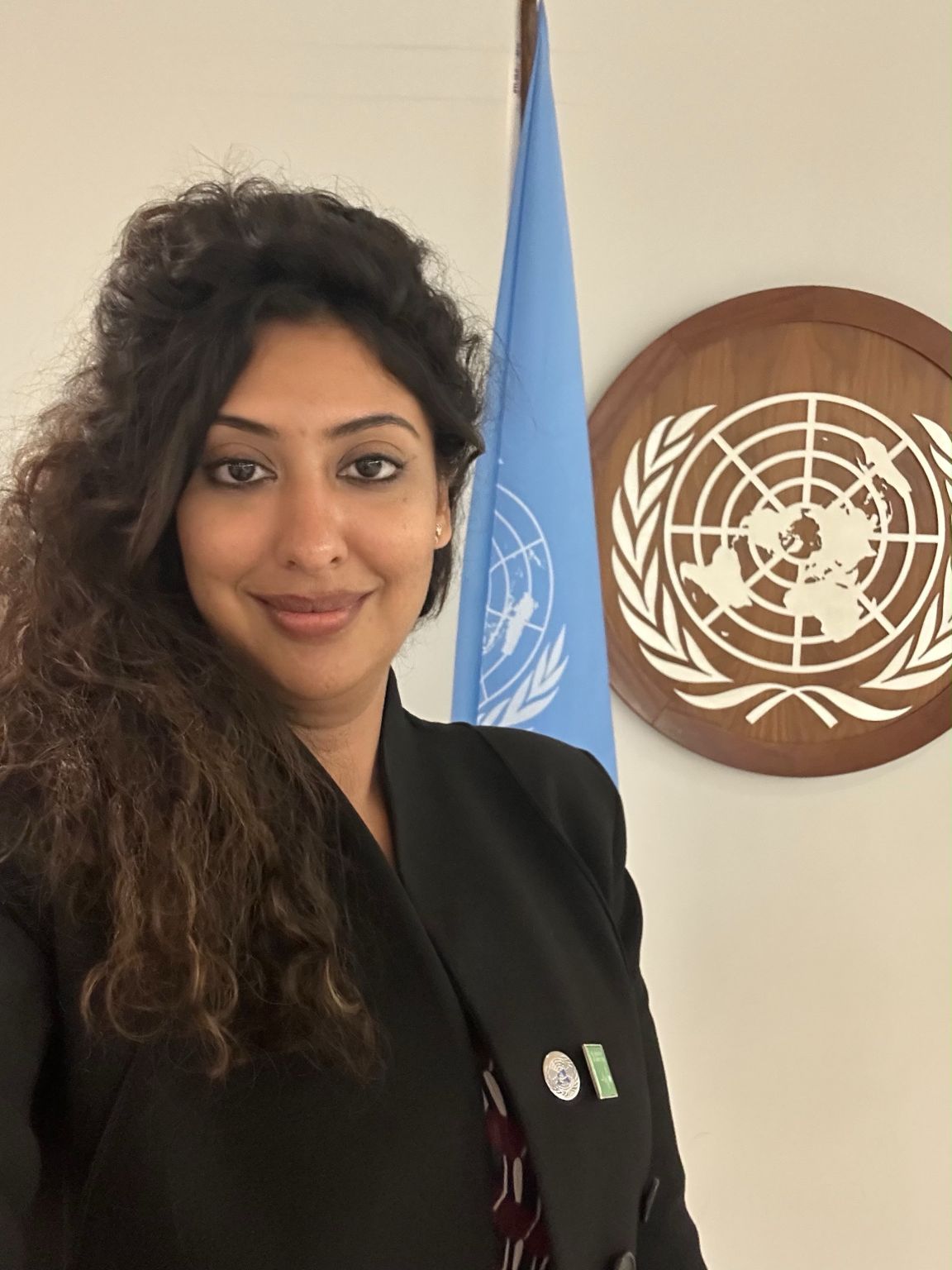
 Srishti Srivastava Speaks at the United Nations Headquarters, 81st UN General Assembly, New York
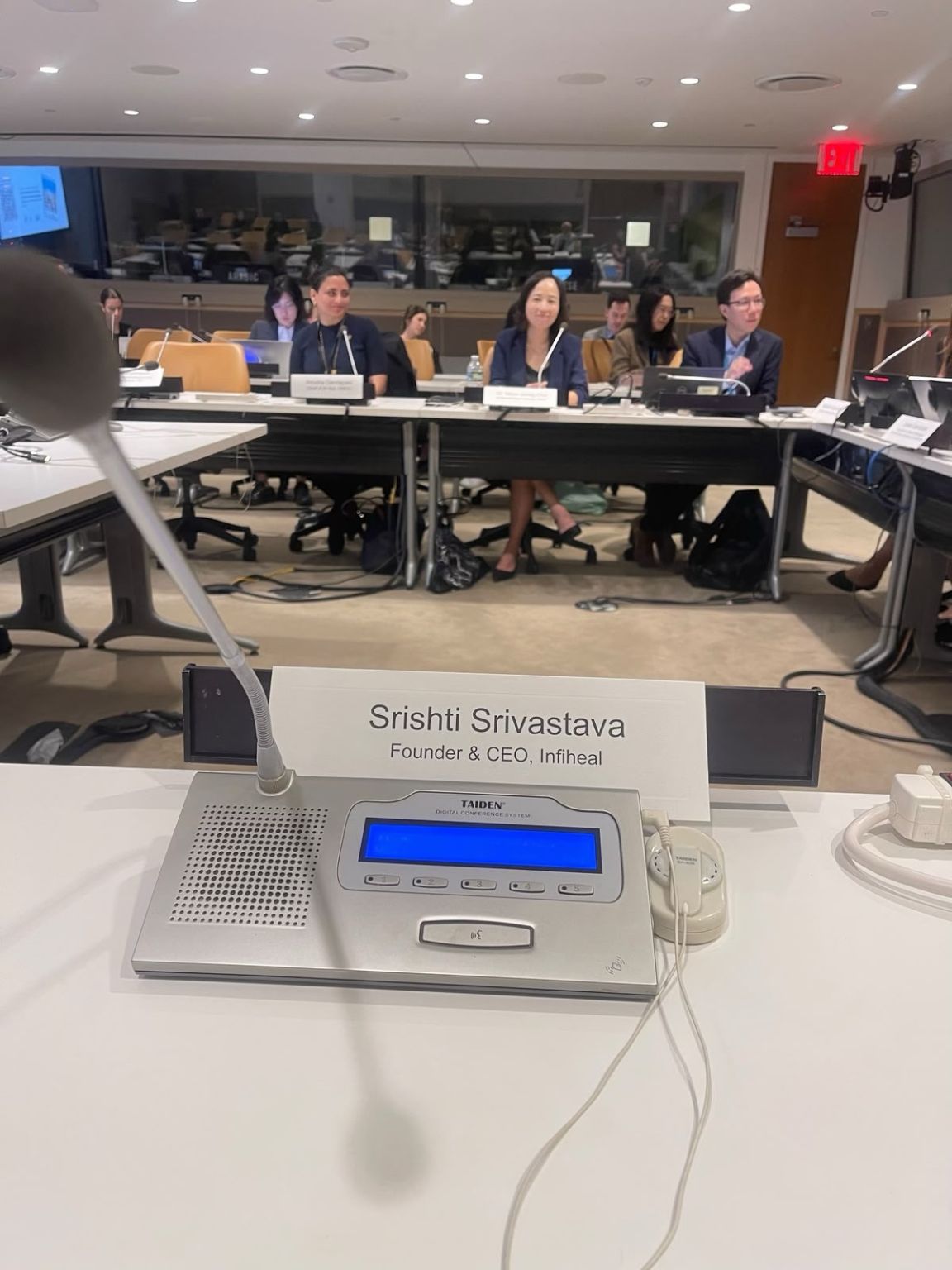
Infiheal's Founder and CEO, Srishti Srivastava, was invited to speak at the United Nations Headquarters in New York during the 81st UN General Assembly, one of the most significant gatherings of global leaders, policymakers, and institutions in the world. The 81st session opened on 8 September 2026, with High-Level Week taking place from 22 to 29 September, themed "Restoring trust, managing transformation: A United Nations that delivers for all."
About the Panel: Artificial Intelligence and Aging
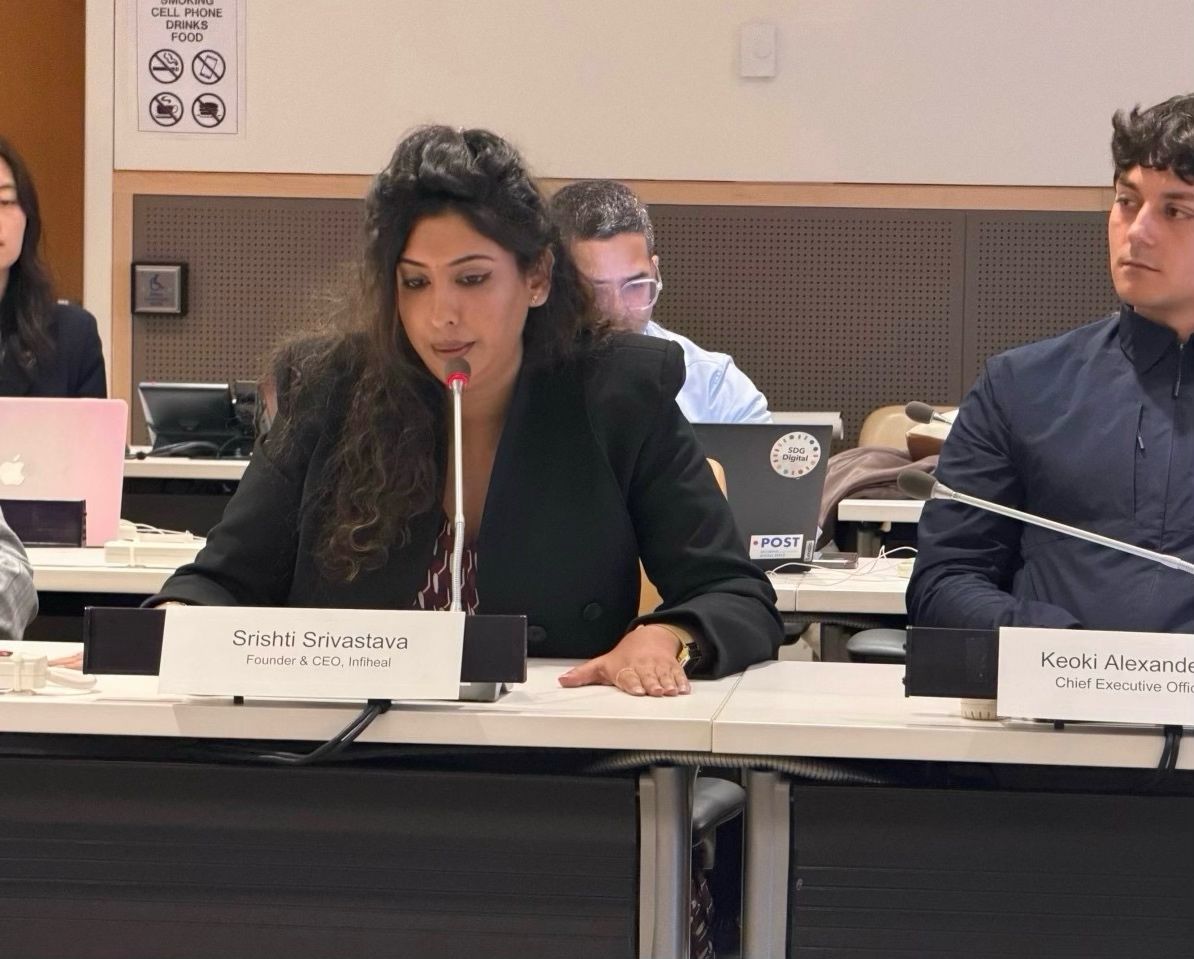
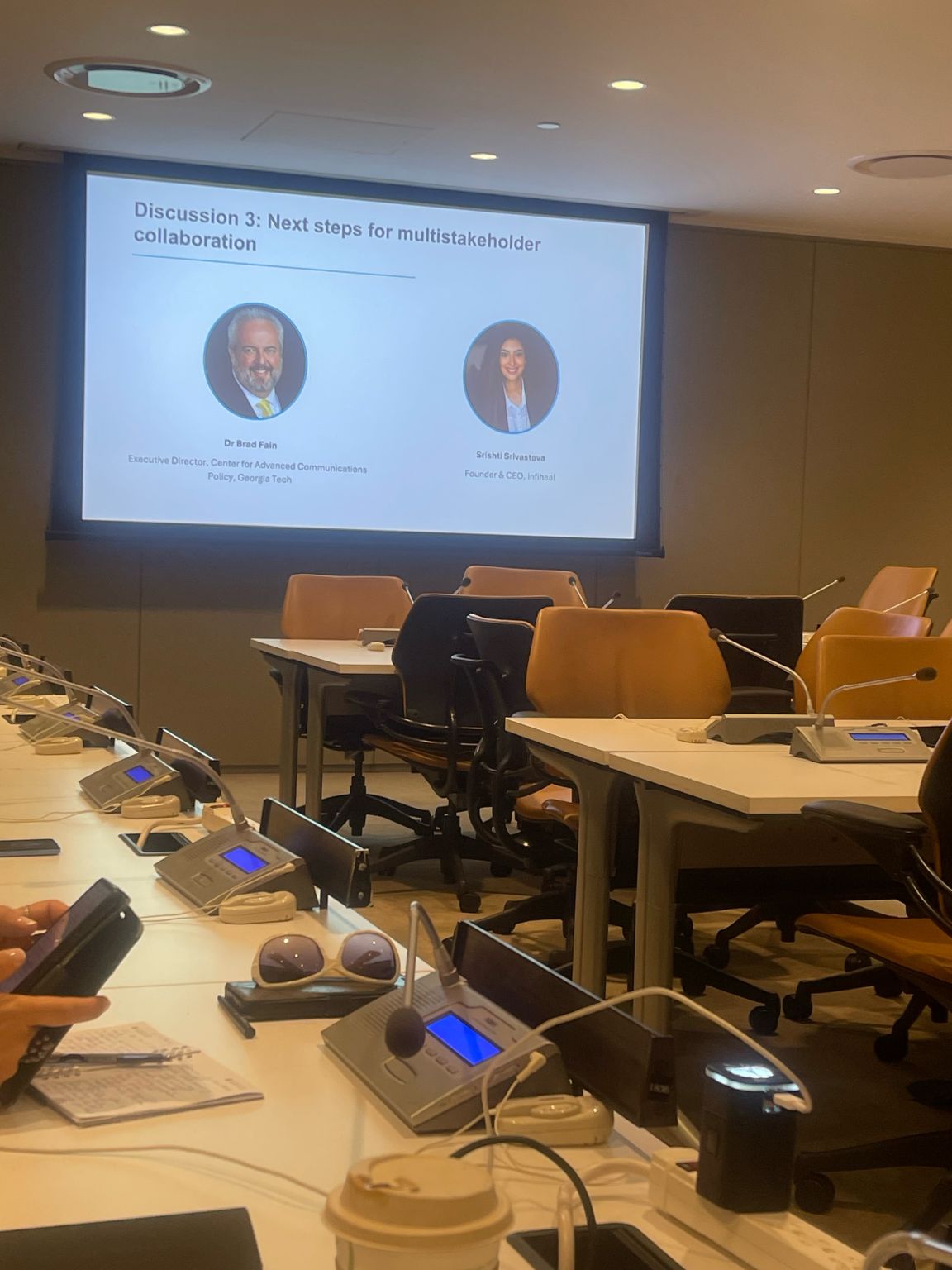
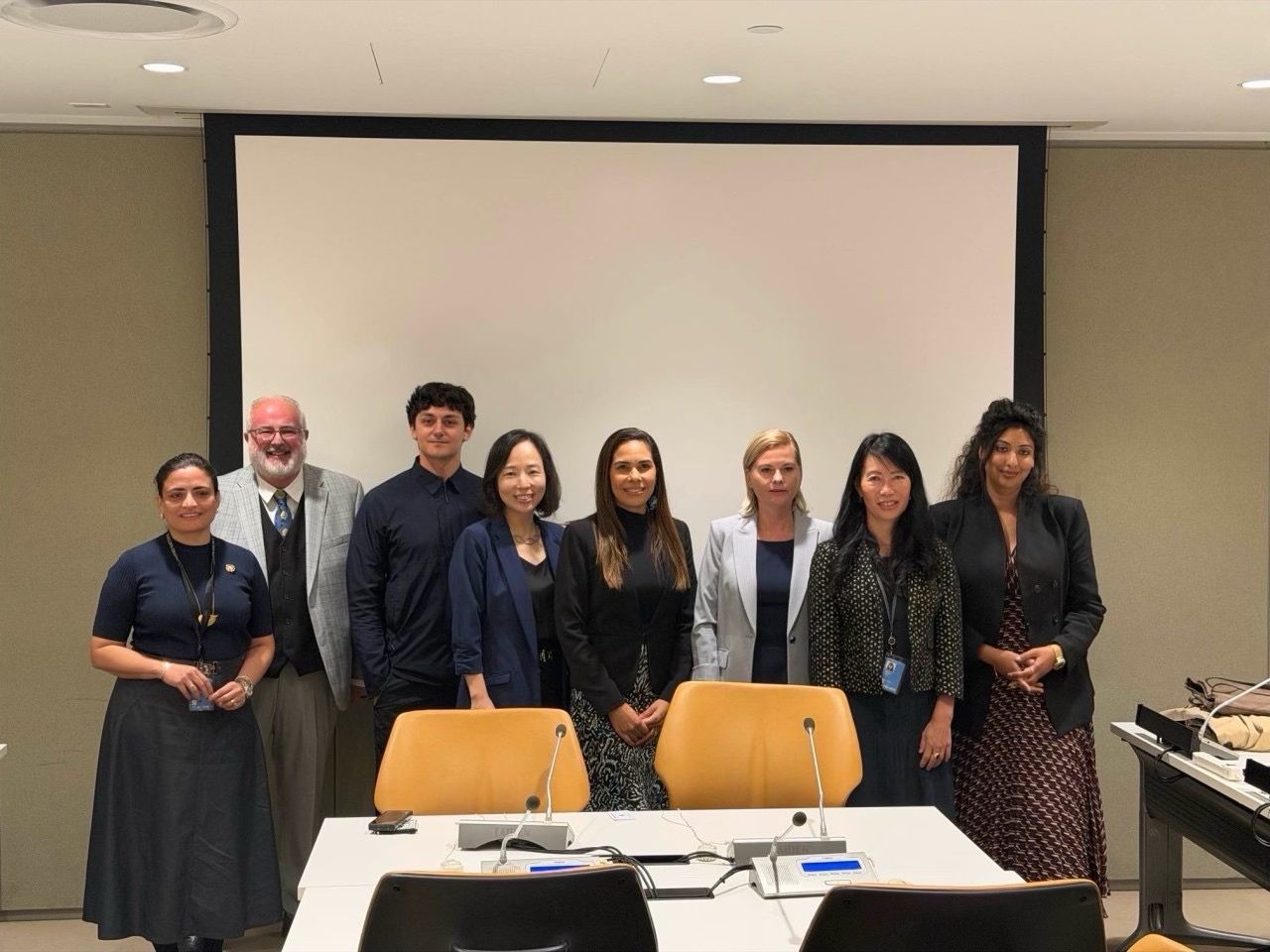
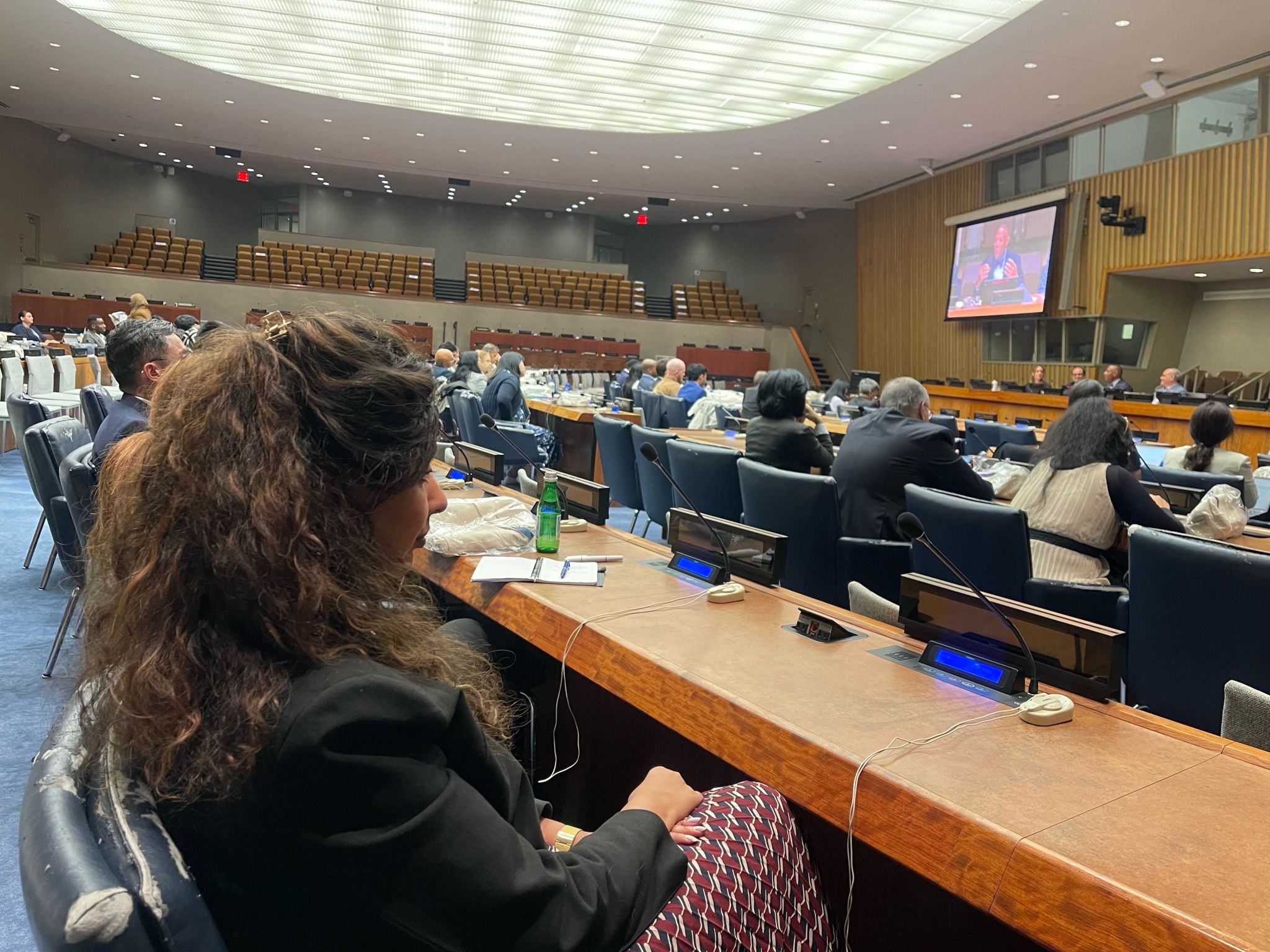
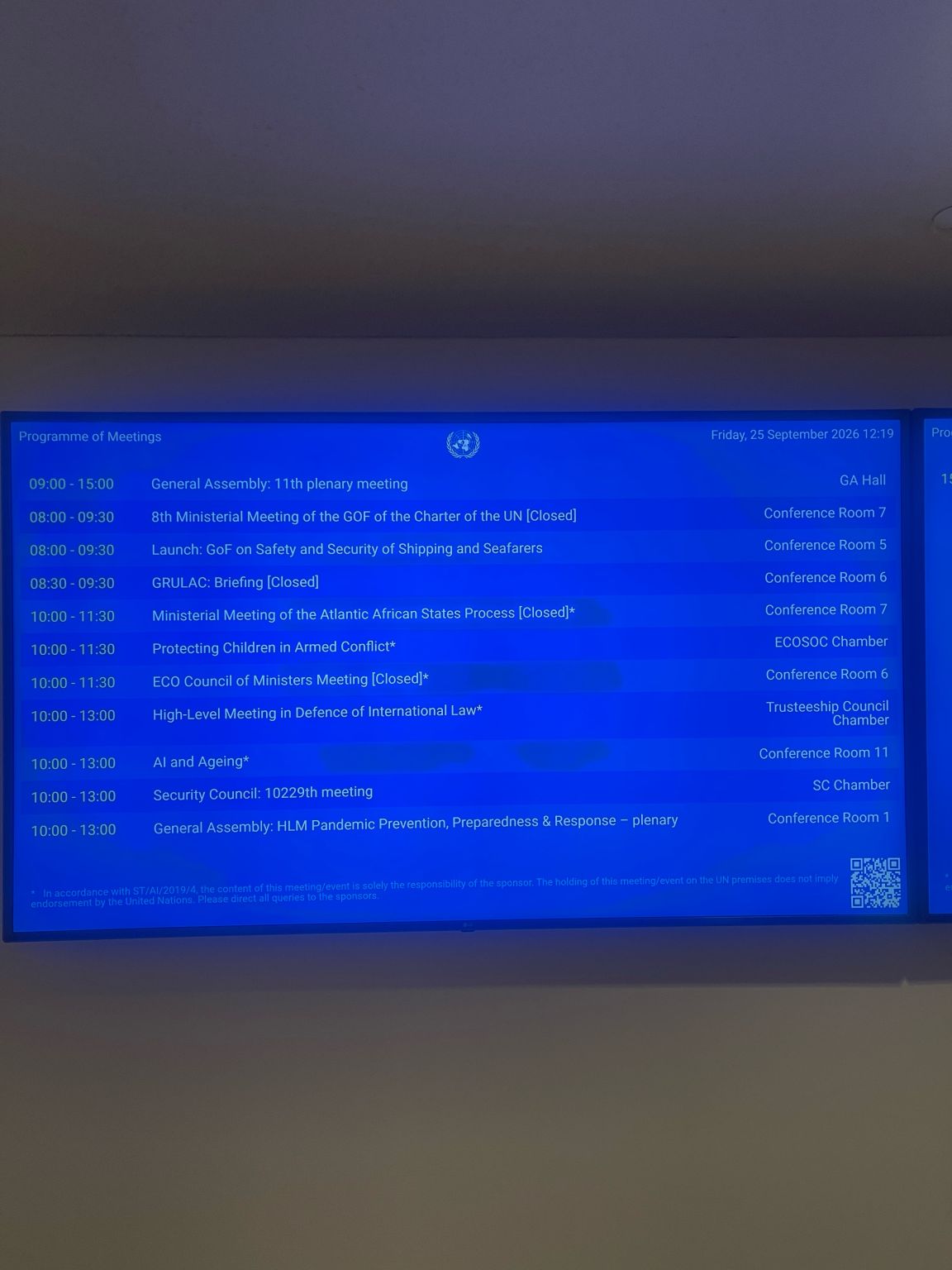
Srishti was invited to speak on the panel "Artificial Intelligence and Aging", hosted by the Permanent Mission of the Republic of Korea to the United Nations, the International Telecommunication Union (ITU), EY, and the Korea Advanced Institute of Science and Technology (KAIST). The session was held in Conference Room 11 at UN Headquarters and brought together representatives from the United Nations, national and state governments, academia, and industry.
The session was opened by H.E. Ambassador Jihoon Cha of the Permanent Mission of Korea to the UN, with remarks from Dr. Cosmas Luckyson Zavazava, Director at ITU, and was moderated by Ms. Jenny Arana V of ITU. Fellow panellists included Dr. Moon Choi of KAIST, Ms. Jurate Useviciute of the Permanent Mission of Lithuania to the UN, Ms. Yumiko Kamiya of UN DESA, Ms. Anusha Dandapani of UN ICC, Ms. Kristina Scheufler of EY, Dr. Brad Fain of Georgia Tech, and Mr. Keoki Alexander-Chang of Minikai.
AI was the defining theme of this UNGA season. But as Srishti noted in her remarks, the conversations that will matter most are not about what AI can do. They are about safety and inclusion: who AI is built for, who it might harm, and who gets left out.
Three Things Srishti Spoke About
With Healo now supporting over one million people across 165 countries in 93 languages, Infiheal's experience of building AI for mental health at scale gave Srishti a grounded, evidence-based perspective to bring to the panel.
She spoke about three things the field cannot afford to get wrong.
The first is the real risk of AI psychosis. When AI meets people in vulnerable moments, it can reinforce harmful beliefs and deepen isolation. Safety cannot be an afterthought in design. It has to be built in from the beginning, especially in mental health, where the stakes of getting it wrong are deeply human.
The second is human-in-the-loop design as a structural safeguard. When AI gets something wrong, a human needs to be there to catch it, whether that is a caregiver, a clinician, or a doctor. This is not a limitation of AI. It is how responsible deployment is supposed to work.
The third is the bio-psycho-social nature of health. Longevity is not only about adding years. It is about adding healthy ones. AI built for aging populations has to serve the whole person, across physical, psychological, and social dimensions, and it has to be built participatorily, with the people it is designed to support genuinely in the room during the design process.
A Second Session: Pandemic Prevention and AI Preparedness
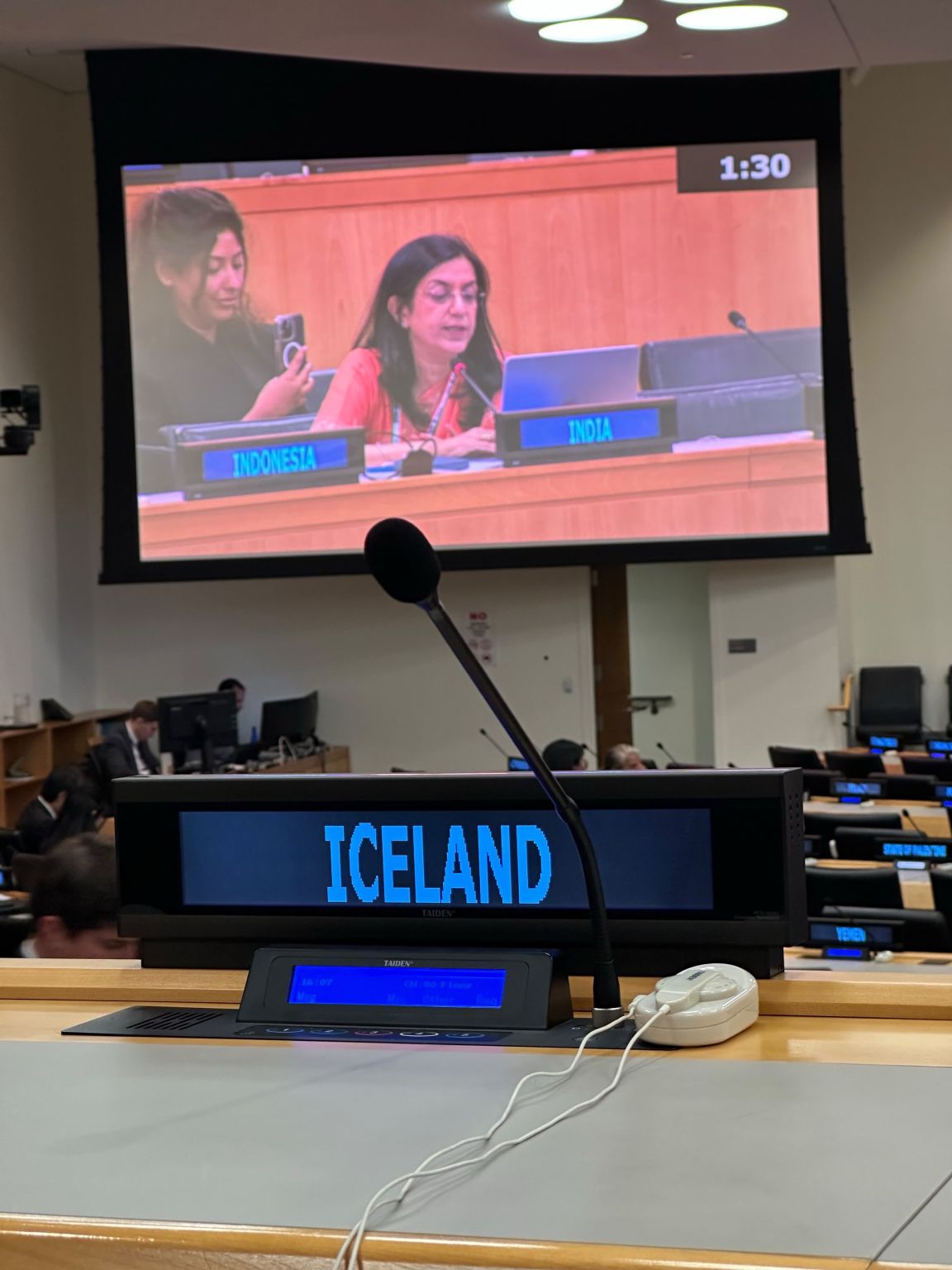
On the same day, Srishti also attended the high-level General Assembly on Pandemic Prevention, Preparedness and Response, where Smt. Geetu Joshi of India's Ministry of Health and Family Welfare made a point that applies equally to AI: preparedness cannot begin once the crisis has already started.
The choices that matter most are made before harm arrives. That principle sits at the heart of how Infiheal builds Healo, and it is the same principle that responsible AI governance at a global level must take seriously.
Infiheal is grateful to the International Telecommunication Union, the Permanent Mission of the Republic of Korea, EY, and KAIST for the invitation to a conversation the world needs to be having more of, and in more rooms than the ones specifically convened for it.