
Introduction
A few decades ago, survival was the major reason for concern globally. Today, many of those primal concerns regarding shelter, food, safety have taken a back seat but there are newer sources of anxiety that have arisen. Some may even say that anxiety and burnout are now more than ever. But why is that so? Is it that people are now aware of their anxious moments? Or have we given rise to a set of conditions in the world which create anxiety and burnouts more than before?
In this blog, we’ll discuss the nature of shifts in anxiety experienced by people generationally and what has changed to contribute to that. If you’ve ever felt that anxiety is not a standalone concern, but actually a byproduct of the cultural and economic conditions we live in, then this blog might be an interesting read for you!
How modern economy fuels anxiety
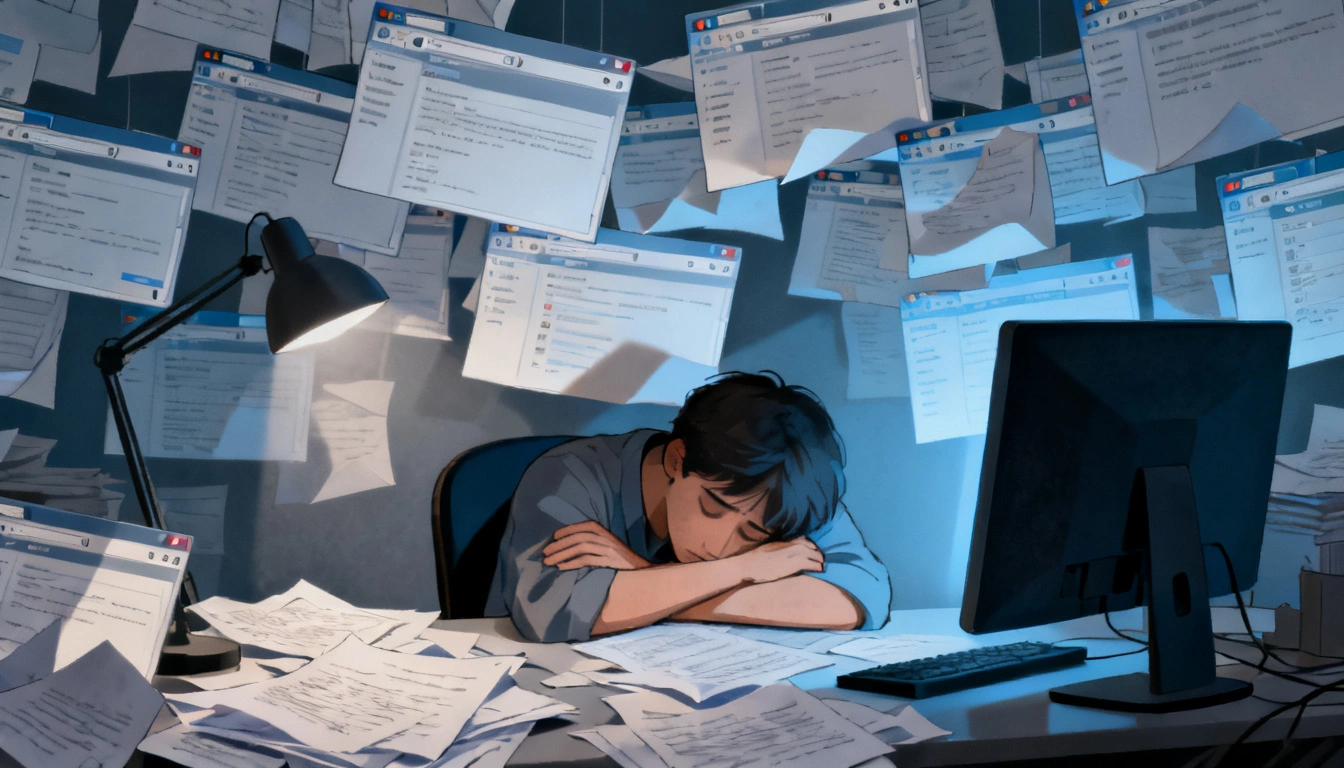
We’re living in an era where stimulation surrounds us from all sides.Industries,devices, apps, brands and any object born into modern culture demands our attention in some way. Not only does this kind of overstimulation cause an attention deficit arising from an abundance of resources, but it also fuels the anxiety economy. But what exactly is an anxiety economy? It’s the booming market driven by chronic societal and economic uncertainty. It captures both our personal financial stress and the corporate commodification of our fears.
A healthy economy depends on people continuing to strive.If everyone felt completely satisfied, many industries would struggle.As a result, modern culture often communicates subtle messages:
- You could be more successful.
- You could be more productive.
- You could be healthier.
- You could be more attractive.
- You could be doing more
This inherently creates a gap between our real selves (who we currently are) and our ideal selves (who we want to become), yet another fantastic concept given by Carl Rogers
The Shift From Survival Anxiety to Possibility Anxiety
Historically, anxiety was often tied to concrete threats.Today, anxiety increasingly comes from possibilities. We see hundreds of random strangers on the internet follow a different lifestyle than us (sometimes better, sometimes worse). After so much of consumption, comparison and grief over unlived experiences, we keep thinking about it at random times of the day,wishing we were in their shoes. This thinking leads to overthinking and as time passes by-it becomes worrying.
Worrying if we are ever going to have the same experiences as others
Worrying if we are reaching our potential
Worrying about our choices
Modern life comes with a lot of freedom. And with that freedom comes a lot of choices. This leads to a paradox of choice which suggests that the more options we have, the less satisfied we feel with our decision.
The more we spend time living in a world of possibilities, the more we’ll feel anxious about the lives we could live, the experiences we could have and the materialistic objects we could purchase. Earlier, anxiety was about sustaining a living, now it’s about making that living worthwhile. But the real question is, who decides what worthwhile is?
Conclusion: Maybe Anxiety Is a Feature of the World We Live In
If modern anxiety often feels personal, it is because we experience it individually. We lie awake worrying about our careers, our finances, our future, and whether we are doing enough with our lives. Yet many of these worries are not created in isolation. They emerge from a culture that offers endless possibilities but little certainty, celebrates achievement but rarely defines what is enough, and encourages constant striving while making rest feel unproductive.
This does not mean anxiety is simply caused by the world around us. But it does mean that some of our stress may be a reasonable response to living in environments marked by uncertainty, comparison, and pressure. Understanding this can shift the conversation from "What's wrong with me?" to "What am I responding to?"
Developing that awareness is often the first step toward navigating anxiety more intentionally. Tools like Healo can help people reflect on patterns of stress, explore the pressures shaping their emotional well-being, and recognize how burnout, uncertainty, and the pursuit of achievement show up in their daily lives. If you’re unsure about how intense your anxiety is or whether what you’re experiencing is really anxiety, take the Generalized Anxiety Test to find out more. Because sometimes managing anxiety begins not with fixing ourselves, but with understanding the world we are trying to keep up with.